

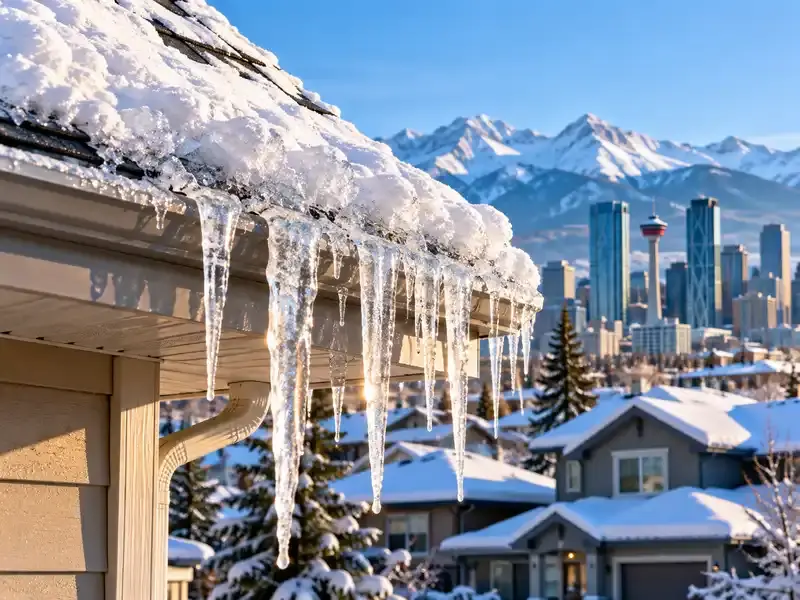
Icicles hang from your eaves. A brown stain spreads across the bedroom ceiling after a Chinook week. Sound familiar? Ice dams cause both. Ice dam prevention starts with one simple fact: snow melts on a warm part of the roof, runs to the cold edge, and refreezes. That frozen ridge retains the water behind it, which backs up under your shingles. In most Calgary homes, heat leaking from the attic starts the cycle. This guide explains how Calgary’s winter swings feed the problem, how to reduce ice dam formation, how to protect the roof if one forms anyway, how to remove ice safely, and which warning signs deserve a call. No roof is completely immune to ice dams, and no single measure guarantees prevention.
In short: A ridge of ice along the roof edge that prevents snowmelt from draining is known as an ice dam. To reduce the risk, seal attic air leaks, add the right insulation, and keep soffit vents clear. To protect the roof if one forms anyway, consider appropriate ice and water shield protection beneath the shingles, in accordance with applicable code and manufacturer instructions. To remove ice, hire a professional and stay off the roof.
Ice Dam Prevention in Calgary: Understand the Causes
You cannot fix something if you do not understand it. Therefore, begin by studying the fundamental principles and then move on to making the necessary corrections. Reducing ice dam formation and protecting the roof once a dam forms are two different jobs. Keep that split in mind for the whole article.
What causes ice dams on roofs?
Ice dams are formed when the heat from the attic melts the snow on the roof, and the water refreezes at the cold eaves. A ridge of ice that forms along the eaves and prevents meltwater from draining is known as an ice dam. A cool overhang, a warm piece of roof deck, and snow on the roof must all line up.
Here is the sequence:
- The attic allows heat from the house to escape.
- The warm attic heats parts of the roof deck above it.
- Snow on those warm patches melts.
- Water runs down to the eaves, which sit outside the heated space and stay cold.
- The water refreezes and forms a ridge.
- New meltwater accumulates behind the ridge and moves upward and underneath the shingles.
One caution. Icicles alone do not prove a damaging dam is present. Small icicles on a cold morning can be harmless. A thick, continuous band of ice along the eave, with water staining inside, tells a different story.
Common reasons homeowners ask why ice forms on roof eaves:
- Warm air is escaping from the living area into the attic
- Thin or uneven attic insulation
- Blocked soffit vents that stop cold air from moving along the underside of the roof deck
- Rooflines that are complicated with valleys and dormers collecting snow
- Gutters filled with leaves and old ice
How attic heat loss in winter contributes to ice dams
In the winter, attic heat loss occurs when warm interior air seeps through ceiling openings and warms the roof deck from below. Warm air rises, and that warm, moist air from your kitchen, bathrooms, and bedrooms looks for any gap into the attic. Builders refer to this phenomenon as the stack effect. The greater the height of the house, the more intense the airflow pull becomes.
Every gap in the ceiling plane becomes a leak. Typical attic bypasses include:
- Attic hatches that are not gasketed or insulated
- Plumbing stacks and vent pipe penetrations
- Wiring holes drilled through top plates
- Pot lights and other ceiling fixtures
- Gaps around chimneys and flues
- Tops of interior walls and dropped soffits
This air carries heat by convective heat loss. Additionally, it unevenly warms the roof deck. One section of snow melts while the neighbouring section stays frozen. That uneven snowmelt feeds the dam.
Any Calgary house, regardless of age, has the potential to leak heat. Common problem areas include complicated rooflines, vaulted ceilings, and pot lights. You can gain more accurate information through an attic inspection than by relying on guesswork or assumptions.
How Calgary’s Chinook winds and freeze-thaw cycles affect roofs
Chinooks contribute to ice dams by melting roof snow quickly, then letting the water refreeze when cold air returns. Calgary, AB winters swing fast. A Chinook arch builds over the foothills, warm Pacific air drops down the east slopes of the Rockies, and the temperature can jump sharply in a few hours. Then the Arctic air returns.
That swing matters. During a Chinook, snow on the roof softens and melts, even if the attic is not warm. Meltwater runs. When the cold snaps back, the water refreezes at the eaves and in the gutters. Repeat the cycle a few times, and the ice builds in layers. Ice can also lift shingles and strain flashing, depending on the roof and how much ice builds up. Repeated freeze-thaw cycles can contribute to roof damage, particularly where water collects or drainage is restricted.
Snowpack insulation also plays a part. A thick blanket of snow slows heat loss from the roof surface, which can keep the deck warmer underneath. Strong sun on a south-facing slope adds melt on top of that. Solar radiation can melt snow on a clear, cold day with no Chinook at all.
We will be honest about the limits. A Chinook does not automatically cause an ice dam. Risk depends on roof design, how much snow sits on the roof, drainage, and temperature conditions. Two similar homes on the same Calgary street can behave differently. One may get a dam after a single thaw, and the other may never see one.
Ice Dam Prevention Methods: Fix Heat Loss and Manage Roof Snow
Ice dam prevention works best as a system. You stop heat from reaching the roof deck, you keep the deck cold and ventilated, and you keep water paths clear. Each step below targets a different part of the problem.
Air sealing attic bypasses: a key ice dam prevention measure
Air sealing means closing the gaps that let warm indoor air reach the attic. It is not the same as insulation. Insulation slows heat. Air sealing stops moving air. Loose insulation sitting on top of a leaky ceiling does little against warm, moist air blowing straight through it.
A qualified contractor typically checks:
- The attic hatch and its weatherstripping
- Plumbing and vent stack penetrations
- Electrical boxes and wire holes
- Top plates of interior and exterior walls
- Chimney and flue chases
- Bathroom fan ducts, which should run to the outside and not into the attic
Take care near anything hot. Chimneys, flues, and some recessed lights need heat-rated materials and correct clearances. Standard foam can create a fire hazard in those spots. If you plan to do this yourself, read the manufacturer’s instructions first. Many homeowners hire a pro for this step.
Attic insulation and ventilation for ice dam prevention
Insulation reduces heat transfer from the living space to the attic. Ventilation moves cold outdoor air under the roof deck to keep it near outdoor temperature and carry away moisture. You need both to work together.
How the airflow should work:
- Cold air enters through soffit intake vents.
- It travels up along the underside of the roof deck.
- It exits through ridge exhaust vents or other high vents.
Ventilation baffles, sometimes called insulation stops, hold the insulation back from the eaves. Without them, loose fill can bury the soffit vents. Soffit vent airflow stops, and the roof deck warms up. This mistake shows up often in attics that were topped up with extra insulation over the years.
What about attic insulation R value in Calgary? Many homeowners want a single number. We will not give you one. The right level depends on your house, the existing assembly, and the code that applies to you. Building requirements in Alberta come from the National Building Code, Alberta Edition. Check which provisions apply to your home, and talk to a qualified insulation contractor or the City of Calgary before you buy material. Higher R value alone will not help if air leaks past it or if vents are blocked.
Check gutters, downspouts, and roof drainage
Gutters do not cause ice dams by themselves. They can make them worse. Leaves, shingle grit, and old ice block the path. Water has nowhere to go and freezes in the trough. That ice then joins the roof edge buildup.
Before freeze-up, usually in October:
- Clear leaves and debris from gutters and downspouts.
- Check that downspouts discharge at least a metre or two from the foundation.
- Look for sagging sections, loose fasteners, and open seams.
- Make sure the drip edge and fascia are sound.
Damaged gutters caused by ice dams are quite common. Heavy ice can loosen the hangers and bend the gutter trough. Proper care of gutters and downspouts includes regular seasonal maintenance, which helps keep the drainage system working well and allows for early detection of any damage. However, it is important to understand one key point: even clean gutters do not ensure that ice dams will not form, and they do not solve the issue of heat loss. If your gutters need repair or replacement, our gutter and siding services can help.
Roof rake for snow removal: when and how to use one
A roof rake pulls snow off the lower roof from the ground. Removing snow may help in some situations. It is a conditional option, not a fix.
If you use one:
- Choose an extendable telescoping roof rake designed for roofs, and follow the manufacturer’s instructions.
- Stand on the ground, never on a ladder.
- Pull snow down in small sections, working from the eave.
- Remove loose snow only, and stop if the snow is hard-packed or icy.
- Do not scrape the shingles. Scraping to bare shingles risks granule loss and mechanical impact damage.
- Stay well clear of power lines, and watch for falling snow and people below.
Clearing snow from roof eaves may reduce risk. It does not guarantee anything. Persistent ice dams point to an insulation, air leakage, or ventilation problem. Skip the rake and call a professional if the roof is steep, the snow is icy, power lines run near the eave, or conditions feel unsafe.
Can roof heating cables help prevent ice dams?
Heating cables create small channels that help meltwater drain. They work in selected areas, such as a problem valley or a short eave section above an entry.
Two types exist. Gutter-only cables keep troughs and downspouts open. Roof edge systems run in zigzag patterns on the shingles and are designed for that job. Do not mix them up.
Things to weigh before you buy:
- Installation quality. Poor clips can damage shingles.
- Electricity use. Cables run during cold, wet weather.
- Maintenance. Cables fail, and you often find out after a leak.
- Coverage. They open a channel, but ice can still form beyond it.
For ice dam prevention in Calgary, heating cables belong in the backup category. They manage symptoms. They do not fix warm attic air or blocked vents. Look into the cause first, then decide whether cables still make sense.
Ice and water shield membrane: protection beneath the shingles
An ice and water shield is a self-sealing membrane installed on the roof deck beneath the shingles. It bonds around nail holes and stops water from passing through if it backs up under the roofing.
Here is the key point. This membrane protects the roof. It does not prevent the dam. Water still pools behind the ice. The membrane reduces the chance that the water reaches the sheathing and your ceiling.
Where it goes and how far up the roof it should run depends on the applicable code and the shingle manufacturer’s instructions. Typical high-risk areas include eaves, valleys, and roof-to-wall junctions. A new roof is the best time to add it. Ask your contractor what the plan includes. If you want help understanding your assembly, our residential roofing services in Calgary cover roof assemblies and eave protection.
Quick comparison of ice dam strategies
| Method | Main purpose | Key limitation |
| Air sealing | Stops warm air from reaching the attic | Needs careful work near heat sources |
| Insulation | Slows heat transfer through the ceiling | Does not stop air leakage by itself |
| Ventilation | Keeps the roof deck cold and dry | Fails if soffits are blocked |
| Roof rake | Removes snow from the lower roof | Does not fix the cause |
| Heating cables | Opens a drainage channel | Treats symptoms and uses power |
| Ice and water shield | Blocks water that backs up under shingles | Does not stop the dam forming |
Ice Dam Prevention Checklist for Calgary Winter Roof Maintenance
Use this list as practical maintenance guidance. It reduces risk. It does not promise that ice dams will never form.
Before winter
- Book an attic and roof assessment if you have had ice dams before.
- Check air leakage and insulation at the attic floor.
- Confirm soffit airflow is clear where your roof assembly needs it.
- Inspect shingles, flashing, eaves, gutters, and downspouts.
- Ask a qualified professional whether your roof has eave protection.
- Note any areas where snow melts unevenly.
During heavy snowfall and temperature swings
- Watch roof edge ice, icicles, and melt patterns.
- Keep accessible drainage routes clear when you can do it safely.
- Use ground-level snow removal where conditions call for it.
- Stay off the roof and do not chip ice.
- Watch for new stains, drips, or damp spots inside.
After an ice dam or winter leak
- Record where and when the leak appeared. Take photos.
- Move belongings and contain water if it is safe.
- Stay clear of wet ceilings, lights, and wiring.
- Arrange an inspection to find the entry point and the underlying cause.
- Check for wet insulation and hidden damage.
Roof Ice Dam Leak Symptoms: Signs Water Is Entering Your Home
The clearest signs of an ice dam leak are ceiling stains, damp drywall, and drips that appear during a thaw. Visible ice is one thing. Water inside is another. Learn the difference early and you save yourself a bigger repair.
Common signs of an ice dam leak inside the house
Watch for these roof ice dam leak symptoms:
- Ceiling stains, damp drywall, or peeling paint
- Moisture along exterior walls or on upper floor ceilings
- Drips during a Chinook thaw
- Wet attic insulation or frost near roof penetrations
- Leaks in the same spot every winter
When water backing up under shingles reaches the roof deck, it can saturate the sheathing and soak insulation. Wet insulation can lose some of its thermal performance, which may make heat loss worse. A cycle starts. If you see an ice dam leaking inside the ceiling, act quickly. Our team handles roof repair services in Calgary for exactly this kind of damage.
How to tell whether an ice dam or another roof defect is responsible
Ice dams can cause backup. So can failed flashing, damaged shingles, bad penetrations, and drainage defects. A stain on the ceiling does not tell you which one is responsible. Water often travels along rafters before it drips, so the stain may sit far from the entry point.
Some clues help. Leaks only during thaw periods after cold snaps point toward ice. Leaks during summer rain point to a different defect. When the cause is uncertain or the leak returns, book a professional roof inspection. A trained eye checks flashing, valleys, eaves, and the attic together.
What to do immediately when water leaks through the ceiling
- Move furniture and belongings away from the area.
- Place a bucket under the drip.
- Stay away from wet light fixtures and wiring. Switch off the circuit if you can reach the panel safely.
- If the ceiling bulges or sags, keep clear. It can collapse.
- Photograph the damage.
If water keeps coming in, call for emergency roof repair in Calgary. Then contact your insurer promptly if a claim may be appropriate.
How to Remove Ice Dams Safely Without Damaging Shingles
The safest way to remove an ice dam is to hire a professional and stay off the roof. When ice is already on the roof, safety comes first. Shingles are the second concern.
Why climbing onto an icy roof or chipping ice is dangerous
Ice on a pitched roof is slick. Falls from roofs can cause serious injuries. Chunks of ice can also drop from above and hit people below. Hammers, axes, and shovels crack shingles, strip granules, and bend flashing. That damage can create a new leak where there was none.
We will not give a step-by-step method for working on an icy roof. It is not safe for homeowners.
Professional ice dam steaming in Calgary
Qualified crews use a low-pressure, high-temperature steamer to melt ice. Steam can melt ice without the hard impact of chipping, which may lower the risk of shingle damage. Suitability depends on the roof, buildup, and site.
If you search for ice dam steaming in Calgary, ask each contractor about their equipment, training, fall protection, and insurance. Understand the limits too. Steaming clears ice. It does not repair a leak, and it does not stop the dam from returning.
Can a roof rake remove ice dams?
Not really. A roof rake removes loose snow. It does not remove ice frozen to the shingles, and prying at solid ice can tear the roof surface. If the ice is firmly attached or out of reach, call a professional.
Can rock salt or chemical ice melt damage roof shingles?
Yes, it can. Do not assume rock salt or a generic de-icer is safe for asphalt shingles, metal flashing, gutters, or plants below. Corrosive runoff can degrade metal parts and harm landscaping. Chemical ice melt on roof surfaces can also stain and wear materials over time.
We will not recommend a specific chemical. Check the manufacturer’s compatibility information, and ask a roofer before you try anything.
When to Call a Calgary Roofing Contractor for Ice Dam Problems
Some problems need an expert, not another weekend project.
Situations that need a professional roof assessment
- Ice dams return in the same areas year after year.
- Water has entered the attic or the living space.
- Shingles, flashing, gutters, or eaves look damaged.
- Ice builds up near valleys, roof-to-wall junctions, or complex transitions.
- You cannot find the source of a leak after you contain the water.
What a roofing inspection should investigate
- Shingles, flashing, and other roof coverings
- Valleys, eaves, and drainage paths
- Signs of water entry and damaged materials
- Whether attic heat loss or restricted airflow plays a role
- Whether you need an insulation or building envelope specialist as well
A good inspector explains what they see and shows you photos. A professional roof inspection should also tell you which items are urgent and which can wait.
Winter roof leak repair in Calgary
Fixing an active leak and fixing the conditions behind recurring ice dams are two separate tasks. A repair stops water today. Air sealing, insulation, and ventilation work address the cause for next winter. Cold weather also limits what a crew can do on the roof. Some repairs are temporary until conditions allow permanent work.
If water is actively coming in, call for emergency roof repair in Calgary. If you need winter roof leak repair in Calgary, our roof repair services in Calgary page explains how we handle repairs and what to expect. Want an expert to look at the roof? Contact Laser Cut Roofing for an assessment.
Does Home Insurance in Alberta Cover Ice Dam Damage?
Home insurance in Alberta may cover certain types of sudden water damage caused by an ice dam, but coverage depends on your policy wording, exclusions, the circumstances, and the insurer’s assessment. Damage related to poor maintenance or wear may be excluded.
What homeowners should check in their insurance policy
Coverage depends on your policy wording, exclusions, the circumstances, and the insurer’s assessment. Policies can treat sudden and accidental water damage differently from damage caused by poor maintenance. Some policies exclude gradual leaks or wear.
What to do:
- Document the damage with photos and notes.
- Contact your insurer promptly.
- Ask about your deductible.
- Ask what emergency mitigation they cover and what receipts they need.
- Keep records of repairs and who did them.
Do not assume every ice dam claim will be covered or denied. Contact your broker or insurer to confirm how your policy applies to the damage.
Frequently Asked Questions About Ice Dams in Calgary
What causes ice dams to form on Calgary roofs?
Ice dams form on Calgary roofs when snow melts over a warm roof deck, runs to the cold eaves, and refreezes into a ridge. Heat escaping into the attic is the usual trigger. The ridge traps water, which backs up under the shingles. Roof design, valleys, and clogged drainage all change how likely a dam is to form.
How do Calgary’s Chinook winds contribute to ice dams?
Chinook winds contribute to ice dams by melting roof snow quickly, then letting the water refreeze at the eaves when cold air returns. Repeated cycles build ice in layers. Chinooks do not automatically cause ice dams, though. Risk depends on snow depth, roof design, drainage, and attic heat loss.
How do I know if an ice dam is causing a roof leak inside my home?
An ice dam is likely causing a leak when ceiling stains, damp drywall, peeling paint, wet attic insulation, or drips appear during a thaw. Leaks that appear after cold snaps followed by melting often point to ice. Other defects can look the same, so a professional assessment may be needed to confirm the source.
How do attic insulation, air sealing, and ventilation help prevent ice dams?
Insulation, air sealing, and ventilation help stop ice dams by keeping the roof deck cold. Insulation slows down the movement of heat from your home into the attic. Air sealing prevents warm air from escaping through cracks and gaps. Ventilation allows cold air to flow under the roof deck, keeping it cool and dry. To effectively prevent ice dams, you should check all three factors together, as each one is connected to the others.
Should I rake snow off my roof after a heavy Calgary snowfall?
Sometimes. A roof rake used from the ground may help remove loose snow from the lower roof in suitable conditions. Do not scrape down to the shingles, as this can remove granules or damage the roofing. Follow the manufacturer’s instructions, stay clear of power lines, and hire a professional if conditions are unsafe.
What is the safest way to remove an existing ice dam from a roof?
The safest way to remove an existing ice dam is to hire a professional and stay off the roof. Do not chip at the ice, because it can crack shingles and bend flashing. Some crews use controlled steam, which may cause less damage than chipping. Steam clears ice, but it does not repair a leak or stop the dam from returning.
Can I use rock salt or chemical de-icers on roof ice dams?
No, do not assume rock salt or chemical de-icers are safe on your roof. They can harm shingles, corrode metal parts, damage plants, and affect drainage systems. Check material compatibility with the manufacturer first. For a safer plan, ask a roofing professional for guidance before applying anything.
Can roof heating cables prevent ice dams on Calgary homes?
Heating cables can help keep a drainage channel open in selected areas, but they do not stop ice dams from forming. Gutter cables and roof edge systems serve different purposes, so choose the right one. They do not fix heat loss, so they are not a complete answer to ice dam prevention. Treat them as a limited support measure.
What is an ice and water shield, and does it prevent ice dams?
An ice and water shield is a self-sealing membrane under the shingles that blocks water backing up from an ice dam. It protects the roof, but it does not stop the ice dam from forming. Placement depends on code and manufacturer instructions, so confirm both before installation.
Does home insurance in Alberta cover ice dam damage?
Sometimes, but it depends on your policy wording, its exclusions, the circumstances, and the insurer’s review. Some sudden water damage may be covered. Maintenance-related damage may not be. Document the damage, take photos, and contact your insurer promptly instead of assuming the outcome.
Final Thoughts
Ice dams come from heat, snow, and Calgary’s wild winter swings. Seal the air leaks, insulate and ventilate the attic, keep drainage clear, and protect the eaves. Do not climb on icy shingles. Call a pro instead. For more on roof care across the city, visit our Calgary roofing services hub.